



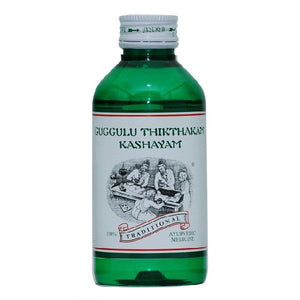
Guggulu Thikthakam Kashayam
Guggulu Thikthakam Kashayam is an ayurvedic formulation used for various types of skin diseases including chronic wounds and ulcers, scabies, pruritis, psoriasis, herpes, and urticaria, as described in classical and Kerala Ayurveda practice. It is traditionally selected for its role in supporting blood purification and helping the body manage inflammation, pain, swelling, and other arthritic ailments, thereby promoting overall skin and joint comfort.
 Exclusive Offers & Deals
-
 GET 15% OFF On Ayurvedic Anti-Pigmentation Kit. T&C Apply
 -
25% OFF on Kaircin Ayurvedic Facial Oil. – Limited Time Only! T&C Apply
-
BUY MORE SAVE MORE – Get UP TO 20% OFF on all products. T&C Apply
Trusted by 50,000+ Customers for remarkable results.


PRODUCT OVERVIEW
This kashayam is a specific combination of guggulu, nimba, amritha, vrisha, patola etc. that is traditionally used in long-standing and chronic skin diseases. The herbs in this act as a blood purifier in Ayurvedic understanding and help the body respond to inflammation and infections, thereby supporting the natural healing of wounds, ulcers, and other deep-seated skin disorders. The proven anti-inflammatory herb guggulu in this kashayam is valued for supporting the healing process, while the anti-bacterial and fungicidal properties of nimba are known to help the body in dealing with infections. It is also regarded as beneficial in severe long-term joint discomfort and in early-stage abnormal tissue growth conditions, when used as part of a broader, professionally guided Ayurvedic regimen.
- Supports comfort in rheumatic joint pains
- Supports skin health in various skin diseases
- Helpful for managing different types of inflammations
- Helpful in the management of psoriasis
As directed by the physician. Get Free Ayurvedic Consultation
| Composition: Each 10 ml is prepared out of | ||||
|---|---|---|---|---|
| S.No. | Sanskrit Name | Botanical Name | Parts Used | Qty |
| 1 | Nimba | Azadirachta inaica | St Bk | 0.673 g |
| 2 | Amritha | Tinospora cordifolia | St | 0.673 g |
| 3 | Vrisha | Adhatoda zeylanica | Rt | 0.673 g |
| 4 | Patola | Trichosanthes dioica | Pl | 0.673 g |
| 5 | Nidigdhika | Solanum xanthocarpum | Pl. | 0.673 g |
| 6 | Pata | Cyclea peltata | Rt | 0.673 g |
| 7 | Vidanga | Embelia ribes | Fr | 0.673 g |
| 8 | Suradaru | Cedrus deodara | Ht Wd | 0.673 g |
| 9 | Gajopakulya | Scindapsus officinalis | Dr.Fr | 0.673 g |
| 10 | Nagara | Zingiber officinale | Rz | 0.673 g |
| 11 | Nisa | Curcuma longa | Rz. | 0.673 g |
| 12 | Misi | Foeniculum vulgare | Fr | 0.673 g |
| 13 | Chavya | Piper brachystachyum | Rt | 0.673 g |
| 14 | Kushta | Sausurea lappa | Rt | 0.673 g |
| 15 | Thejovathi | Zanthoxylum alatum | Fl | 0.673 g |
| 16 | Maricha | Piper nigrum | Dr.Fr | 0.673 g |
| 17 | Deepyaka | Trachispermum roxburghianum | Dr.Fr | 0.673 g |
| 18 | Vatsaka | Holarrhena antidysenterica | St | 0.673 g |
| 19 | Agni | Plmbago rosea | Rt. | 0.673 g |
| 20 | Rohini | Picrorhiza kurroa | Rt | 0.673 g |
| 21 | Arushkara | Semecarpus anacardium | Fr | 0.673 g |
| 22 | Vacha | Acorus calamus | Rz | 0.673 g |
| 23 | Kanamoola | Piper longum | Rt. | 0.673 g |
| 24 | Yuktha | Alpinia calcarata | Rt | 0.673 g |
| 25 | Manjishta | Rubia cordifolia | Rt. | 0.673 g |
| 26 | Athivisha | Aconitum heterophyllum | Rz | 0.673 g |
| 27 | Visha | Aconitum ferox | Rt | 0.673 g |
| 28 | Yavani | Carum copticum | Dr.Fr | 0.673 g |
| 29 | Gulgulu | Commiphora mukul | Exd | 3.365 g |
RECENTLY VIEWED PRODUCTS
-
 DELIVERY WORLDWIDE
We offer worldwide delivery. Experience holistic wellness with global shipping!
-
 7 DAYS RETURN POLICY
We offer a hassle-free return policy within 7 days of purchase. Terms and conditions apply.
-
 24/7 CUSTOMER SUPPORT
We're here to assist you anytime with your queries and concerns.
-
 SECURE PAYMENTS
Enjoy hassle-free transactions with our encrypted and trusted payment gateways.

